

Risk Management in Thirty Minutes
Small business owners can spend a great deal of energy worrying about cash flow, sales and delivery commitments.
Risk and opportunity management puts those concerns in one place and turns them into an action plan. It helps you address potential trouble early while making room for outcomes that could benefit the business. It is also quick and easy.
Definition of Risk and Opportunity Management
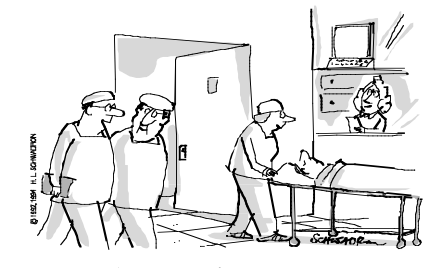
Risk and opportunity management means identifying, assessing and prioritizing potential problems and opportunities. The key word is potential: the outcome is uncertain. A problem that already needs action belongs on a problem list. For example, in surgery, the team treats an existing condition while trying to prevent complications and improve the chances of a successful outcome.
Risk and Opportunity in Thirty Minutes
- Begin with a 10-minute brainstorm involving your colleagues where possible. Ask the questions:
- “What could go wrong in our company in the next six months?” Don’t panic—just make a list. Record each risk in a table and mark it R (risk).
- “What could go right in our company in the next six months?” Record each opportunity in the table and mark it O (opportunity). You will likely identify five to ten risks and two or three opportunities.
- Use the remaining twenty minutes to score the items and choose your first action. For each risk, describe the worst plausible consequence. For each opportunity, describe the potential benefit.
- Score impact and likelihood from 1 to 10. For both scales, 1 is low and 10 is high. Multiply the two scores to produce a priority score from 1 to 100.
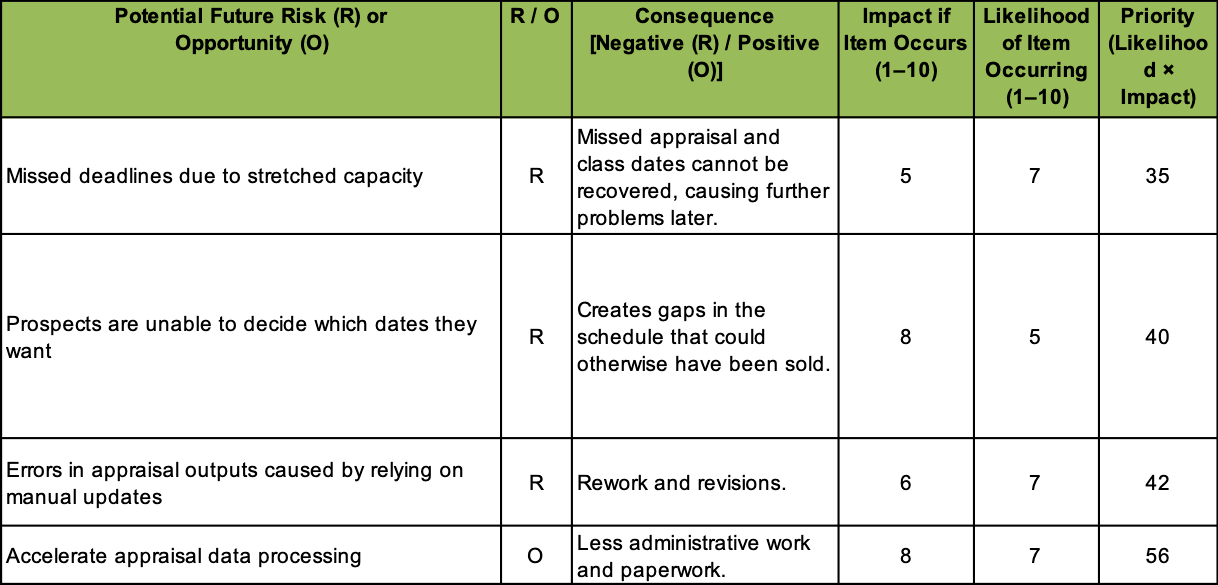
Address the top risks based on their priority. If you have limited time, just pick one risk to address.
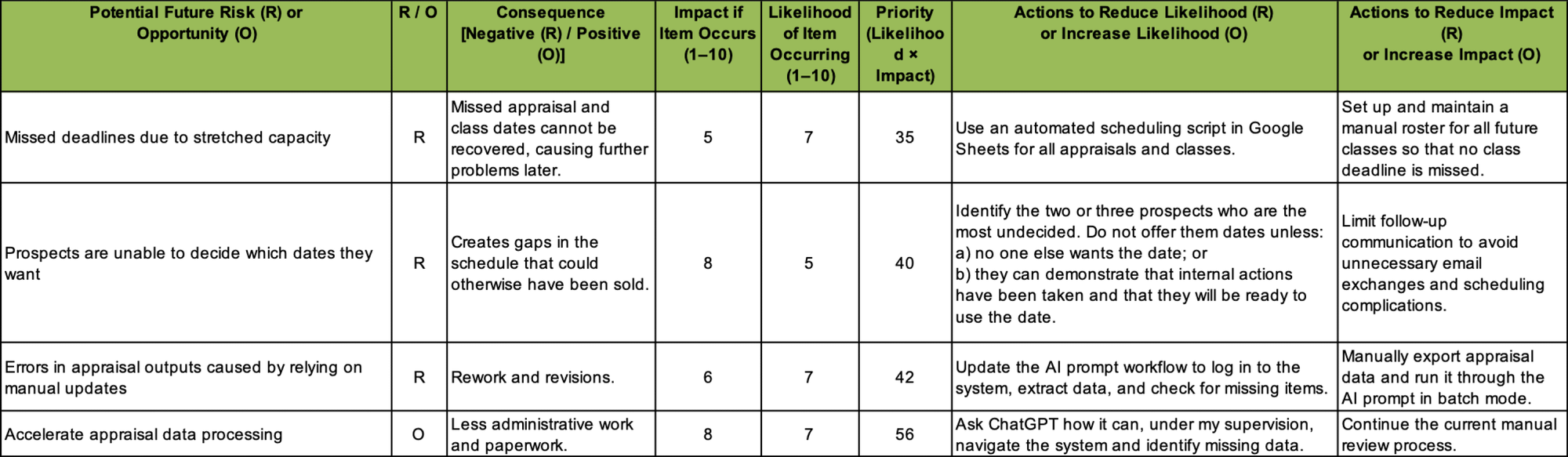
For example, when I am stretched, there is a risk that deadlines are missed. Missed deadlines cannot always be made up, so one delay can create further problems. To reduce this risk, I have created an automated schedule with Google Sheets to send me reminders of key deadlines, along with the email text that needs to be sent to the client.
I am also working on an opportunity to speed up data processing after client events (the last entry in the risk table). The plan is to have ChatGPT look at my data and spot gaps and inconsistencies.
Using Risk Data – Keeping Out of Trouble
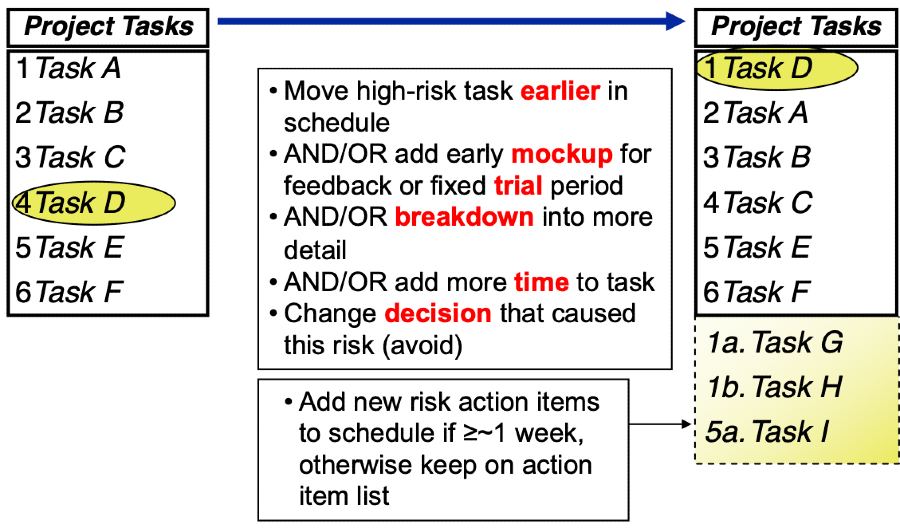
Risk data can influence your work schedule. For example:
- Bring a risky task forward in a project so there is time to learn and recover (e.g., Task D in the diagram).
- Add an early mockup or trial to expose difficulties before a major commitment.
- Break complicated work into smaller tasks and add more time where the risk justifies it.
- Reconsider the decision that created the risk in the beginning. In my example, the risk of missed deadlines comes from scheduling too many commitments at the beginning of the year. Another approach is to block out two or three days every few weeks to allow for delays, problems and time to catch up.
Apply the same method to opportunities. Aim to increase their likelihood and impact. For example, follow up on a training proposal or widen your audience by sharing positive evaluations on your website.
Risk Categories
Risk categories are reminders of the types of risks you might have, for example:
- Customer expectations
- Tracking work
- Sales and marketing
- Product and service quality
- Cash flow, expenses, and profit
- Staff skills, morale, and motivation
- Workflow and bottlenecks
- Estimating and planning work
- Managing suppliers
Conclusion
Update your risk and opportunity list monthly to stay ahead of problems. Include your colleagues in the discussion, as they may spot risks and opportunities you have missed.
Work through a few priorities at a time. You will still face surprises, but earlier action on existing risks leaves more capacity to handle new problems.