
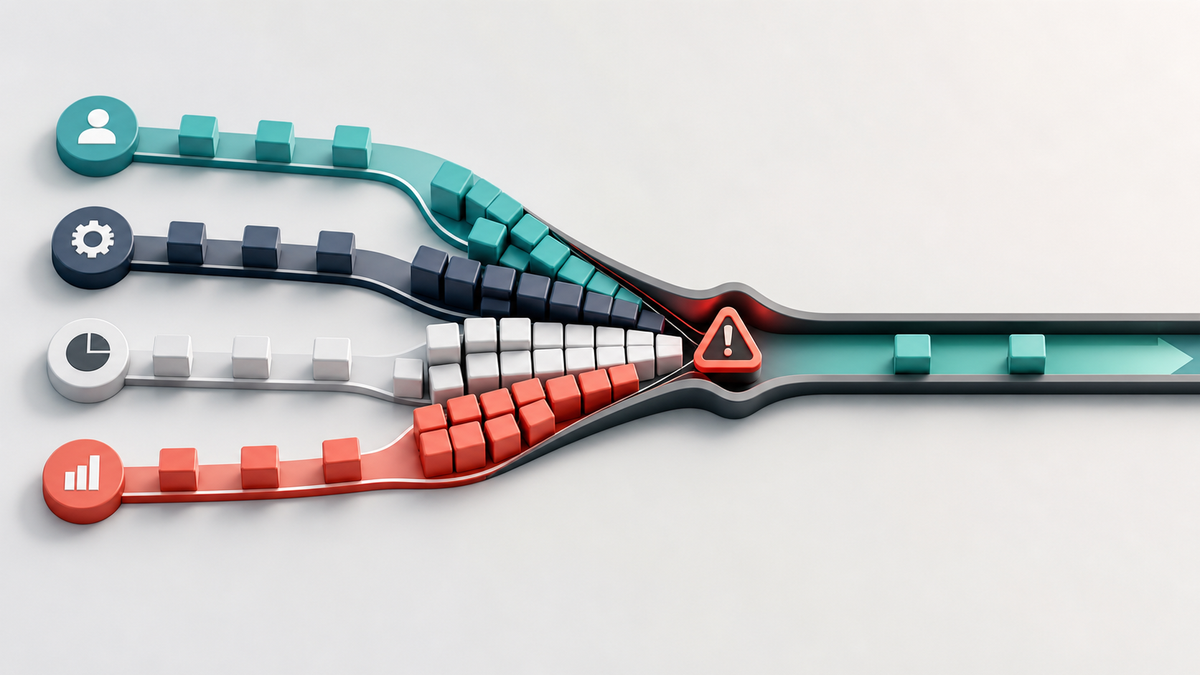
The Problem: Busy Staff but Numerous Delays
Many small businesses feel busy all day long—orders coming in, staff moving constantly, customers being served – yet there are numerous delays in getting work done. The root cause is not a lack of effort, but poor operational flow.
Identify Bottlenecks
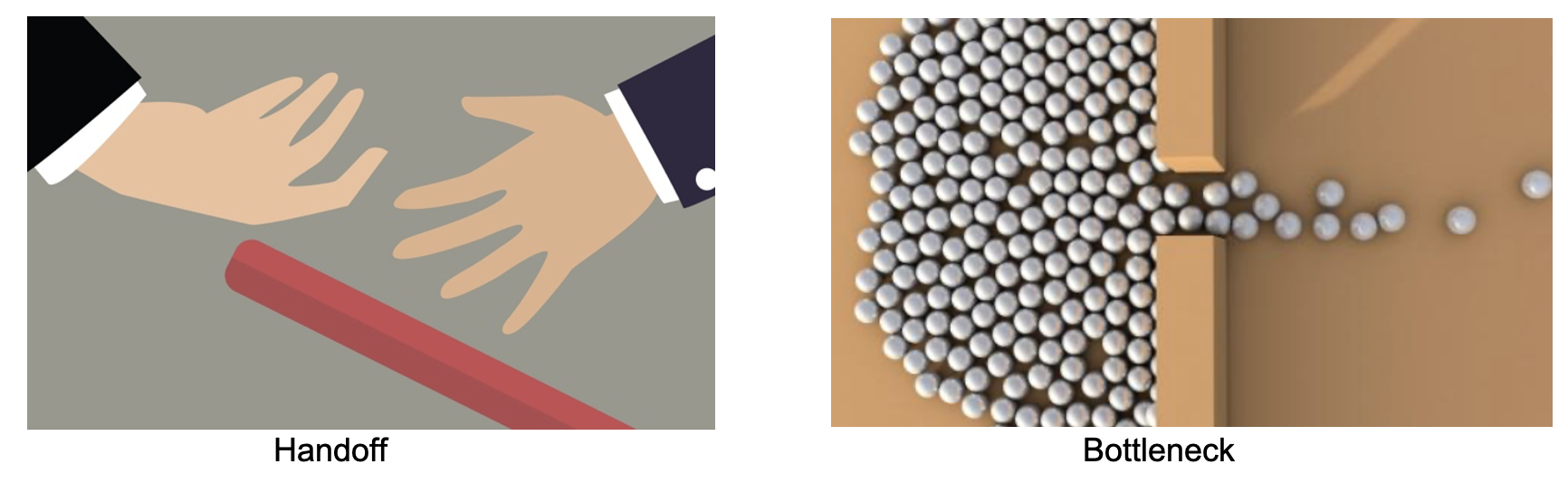
Bottlenecks are one of the most common hidden problems. A bottleneck occurs when one part of your process cannot keep up with the rest, causing delays, idle time, and lost output. For example, if only one employee can process payments, a line forms—even if other staff are available. The result is frustrated customers and missed sales opportunities.
Start by mapping your workflow in simple steps (no more than 10). Look at where work slows down or piles up. In manufacturing or service delivery, this may appear as work-in-progress (WIP) stacking up between steps. In a retail or restaurant setting, it may be long wait times for ordering or payment.
Fix the Bottlenecks
Once identified, address bottlenecks with practical fixes:
- Redistribute work so more than one person can handle critical steps
- Rearrange tools and materials so they are available exactly where needed
- Fix or maintain equipment that causes delays
- Simplify overly complex offerings that slow production
Eliminate Waste
Waste is the second major issue. Waste shows up as rework, errors, excess inventory, or time spent searching for tools and materials. These do not just add cost—they reduce your capacity to generate revenue. For example, if staff spend 20% of their time fixing mistakes or looking for items, you are effectively losing one day per week of productive work.
To reduce waste, introduce simple controls:
- Use checklists to standardize best practices
- Train staff consistently and share lessons learned
- Track errors and identify root causes
- Organize workspaces to eliminate clutter and unnecessary movement
Measure What Matters
Finally, measure performance. Look at metrics such as total output per hour or day, error rates, and time to complete key tasks. Without measurement, inefficiencies remain hidden.
Conclusion
Improving operations does not require large investments. Most gains come from better organization, defined handoffs, clearer processes, and consistent execution. When flow improves, productivity increases, costs drop, and customer experience improves—often immediately.