
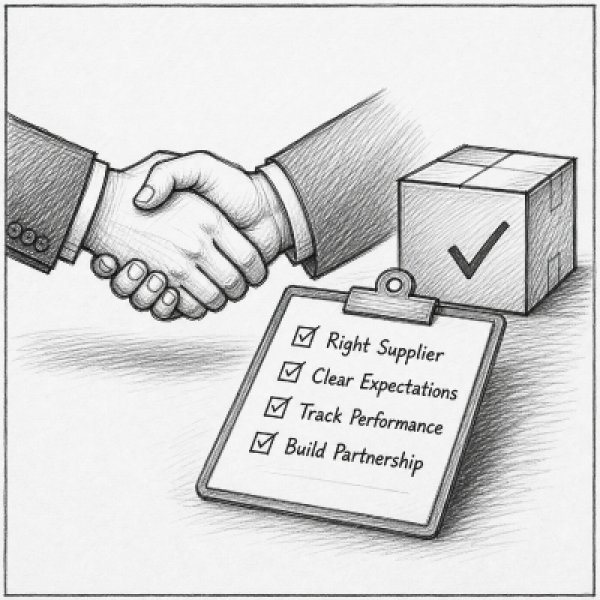
A bad supplier can quietly damage a small business. The supplier may be late, send poor-quality parts, misunderstand the requirements, or disappear when there is a problem. The owner then absorbs the damage: delayed work, unhappy customers, rework, wasted labor, and lost profit.
The mistake is treating supplier management as a purchasing task rather than a risk-management task. The question is not just, 'Who is cheapest?' The better question is, 'Who can reliably help us serve customers without creating extra work?'
Choose Suppliers With Clear Criteria
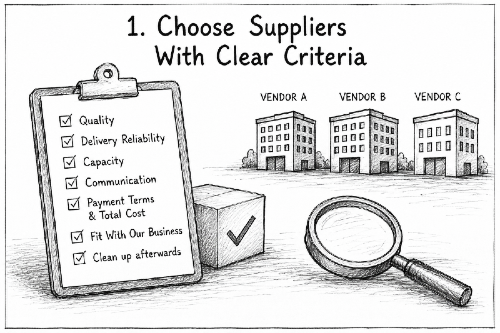
Before selecting a supplier, write down the criteria that matter and compare at least three vendors when the purchase is important. Consider criteria such as the following:
• Quality of the product or service
• Delivery reliability
• Communication and responsiveness
• Payment terms and total cost
• Fit with how your business works
• Capacity to handle your volume
A cheap supplier is expensive if they cause delays, defects, or extra supervision.
Define “Done” Before You Start
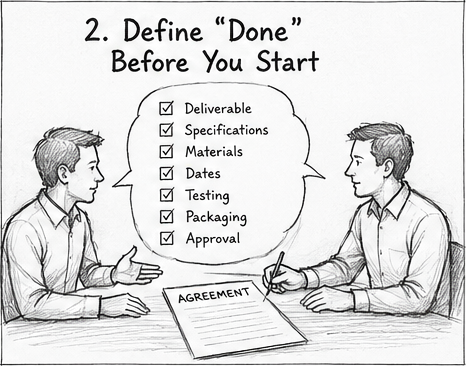
Many supplier problems start because the business and the supplier never agreed on exactly what 'done' means. Before work starts, define the deliverable, service, or feature in plain language. Include important details such as dimensions, materials, dates, interfaces, packaging, testing, cleanup and approvals.
For larger purchases, review the agreement verbally with the supplier and have an AI chatbot (such as ChatGPT or Claude) take a look. This helps catch misunderstandings before money is spent.
Use Milestones Instead of Hope
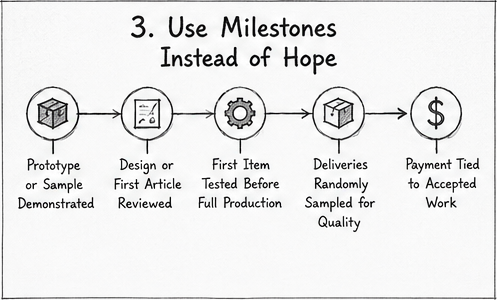
Do not wait until the final delivery to discover a problem. Break the work into checkpoints. For example:
- Prototype or sample demonstrated
- Design or first article reviewed
- First item tested before full production
- Deliveries randomly sampled for quality
- Payment tied to accepted work
This creates early warning signs. It also gives the supplier a fair chance to fix problems before they become expensive.
Measure Supplier Performance
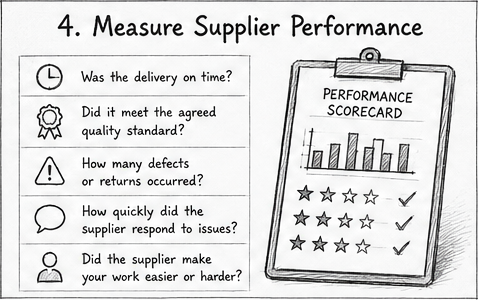
Track a few simple measures. Keep it practical:
- Was the delivery on time?
- Did it meet the agreed quality standard?
- How many defects or returns occurred?
- How quickly did the supplier respond to issues?
- Did the supplier make your work easier or harder?
If the same problem repeats, do not ignore it. Discuss it with the supplier, document the expected fix, and decide when you will recheck performance.
The Bottom Line
Good suppliers help your business run smoothly. Poor suppliers create hidden costs that show up as delays, rework, customer complaints, and stress.
Manage suppliers the same way you would manage any important process:
- Select carefully
- Define expectations clearly
- Check progress early
- Measure performance
- Tie payment to acceptable results
If you do this, suppliers become partners in serving your customers – not another problem for you to fix.
Related video
Related spreadsheet
Spreadsheets are ideal for selecting suppliers and managing vendor performance. Create your own, or purchase the spreadsheet shown in these examples at: https://www.improvingyoursmallbusiness.com/supplier